
Engineered Wood Flooring
There are no results for the current filters. Products below are our suggestions!
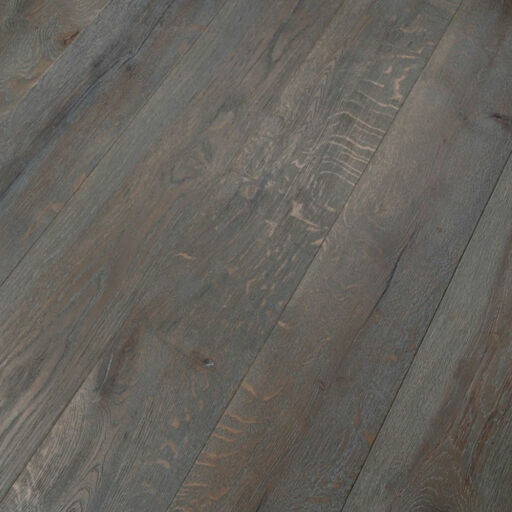
Tradition Antique Engineered Oak Flooring, Distressed, Brushed, Smoked Grey, 220x15x2200mm
£38.00 £45.60 per sqm Inc. VAT Ex. VAT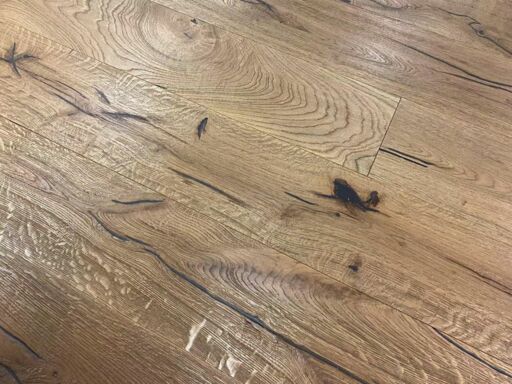
Tradition Antique Engineered Oak Flooring, Golden, Distressed, Brushed, 220x15x2200mm
£43.99 £52.79 per sqm Inc. VAT Ex. VAT
QuickStep Cascada Natural Oak Engineered Flooring, Extra Matt Lacquered, 190x13x1820mm
£69.51 £83.41 per sqm Inc. VAT Ex. VAT
Quickstep Amato Leather Oak Engineered Flooring, Brushed & Extra Matt Lacquered, 145x13x1820mm
£59.32 £71.18 per sqm Inc. VAT Ex. VAT

Tradition Engineered Oak, Golden Age,Brushed, Prime, Lacquered, 190x14x1900mm
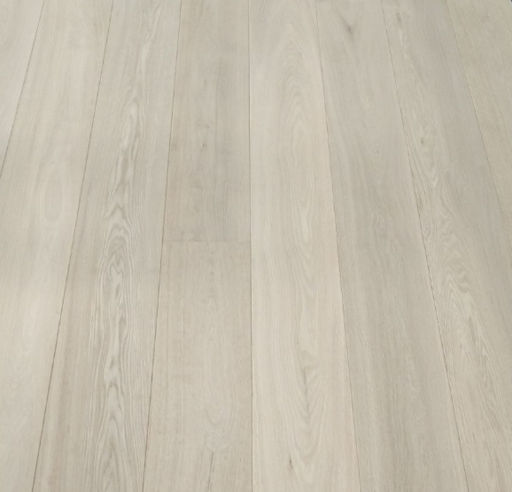
Tradition Unfinished Oak Engineered Flooring, Prime, 190x20x1900mm
£58.01 £69.61 per sqm Inc. VAT Ex. VAT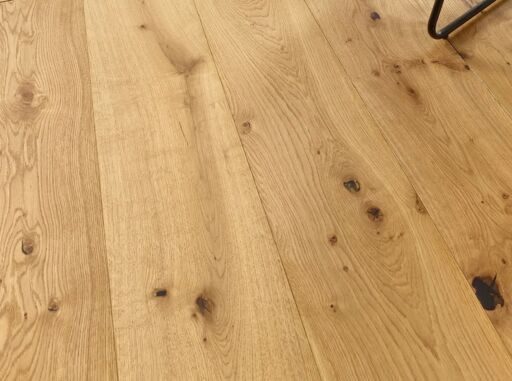
Evolve Chelsea, Engineered Oak Flooring, Natural, Brushed & Oiled, 240x20x1900mm
£52.00 £62.39 per sqm Inc. VAT Ex. VAT

Tradition Oak Engineered Flooring, Classic, Brushed, Oiled, 190x14x1900mm
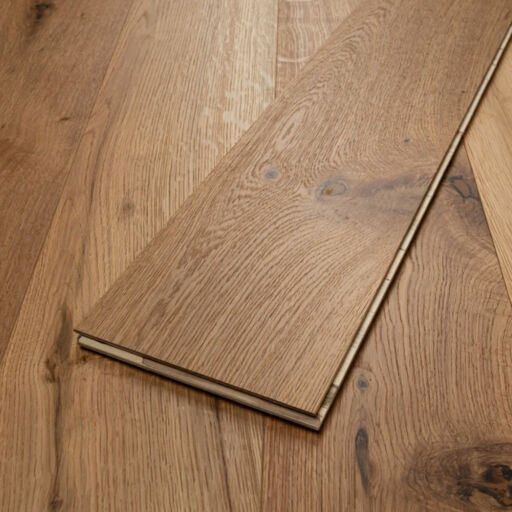
Tradition Engineered Oak Flooring, Rustic, Brushed, Oiled, 190x14x1900mm
£31.99 £38.39 per sqm Inc. VAT Ex. VAT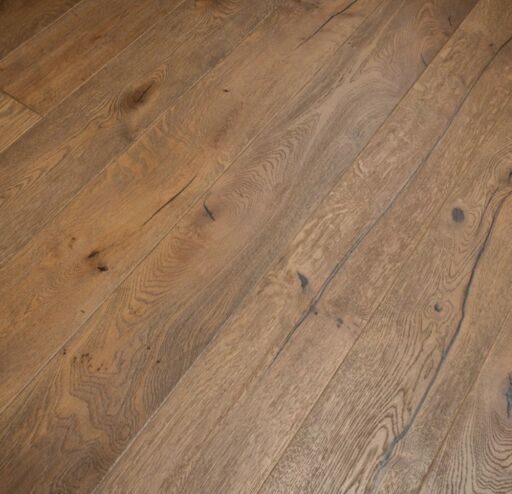
Tradition Antique Golden Bronx Engineered Oak Flooring, Distressed, Brushed & Oiled, 190x14x1900mm
£37.99 £45.59 per sqm Inc. VAT Ex. VAT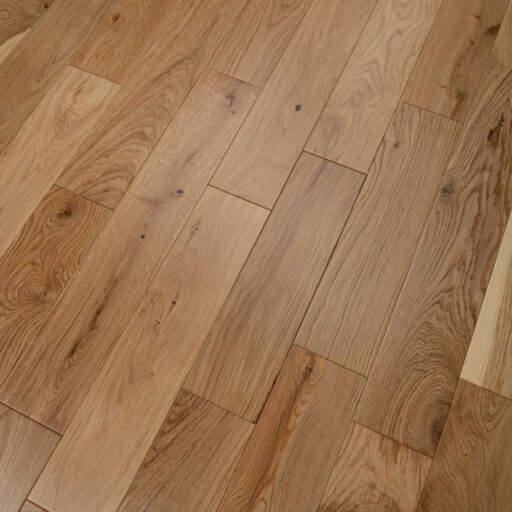
Tradition Engineered Oak Flooring, Rustic, Lacquered, RLx125x18mm
£36.00 £43.20 per sqm Inc. VAT Ex. VAT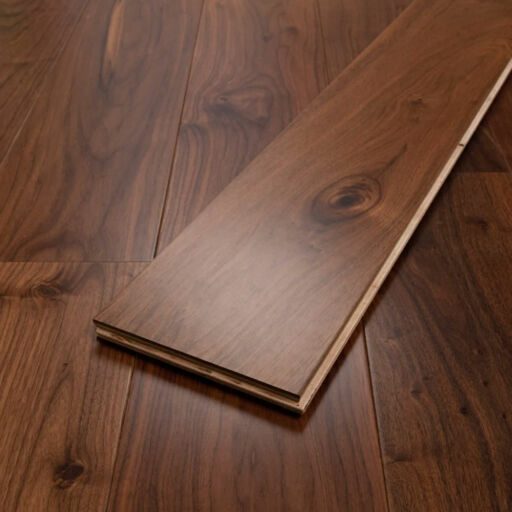
Tradition Engineered Walnut Flooring, Rustic, UV Oiled, 190x20x1860mm
£56.99 £68.39 per sqm Inc. VAT Ex. VAT
Quickstep Cala Leather Oak Engineered Flooring, Brushed & Extra Matt Lacquered, 220x13x2200mm
£92.69 £111.23 per sqm Inc. VAT Ex. VAT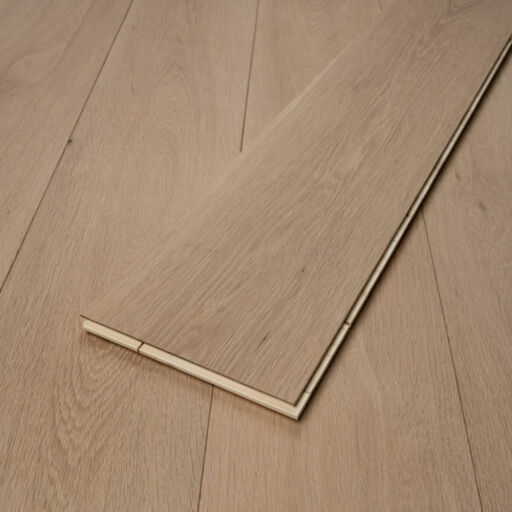
Tradition Unfinished Oak Engineered Flooring, Prime, 190x14x1900mm
£51.99 £62.39 per sqm Inc. VAT Ex. VAT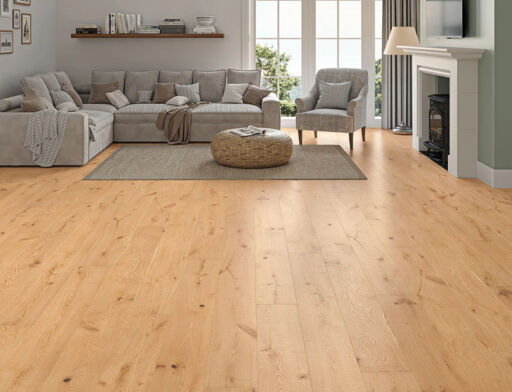
Sorsele Engineered Oak Flooring, Rustic, Lacquered, 190x14x1900mm
£34.99 £41.99 per sqm Inc. VAT Ex. VAT
Kalix Engineered Oak Flooring, Rustic, Brushed & Oiled, 190x14x1900mm
£34.99 £41.99 per sqm Inc. VAT Ex. VAT
Tradition Oak Engineered Flooring, Prime, Invisible Lacquered, 190x14x1900 mm
£50.99 £61.19 per sqm Inc. VAT Ex. VAT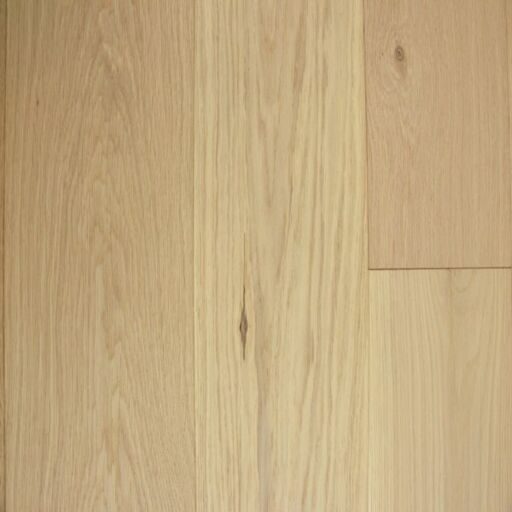
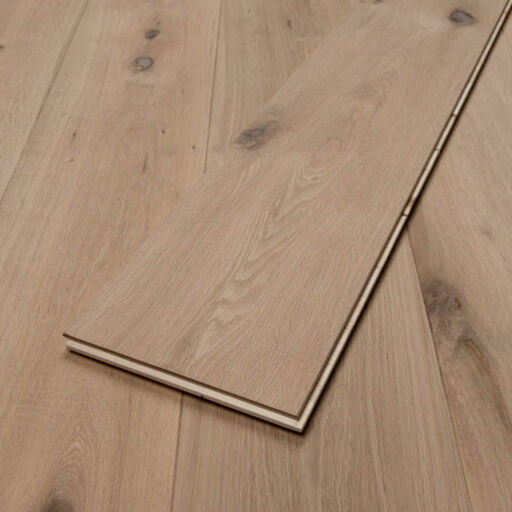
Tradition Oak Engineered Flooring, Natural, Unfinished, 190x14x1900mm
£35.99 £43.19 per sqm Inc. VAT Ex. VAT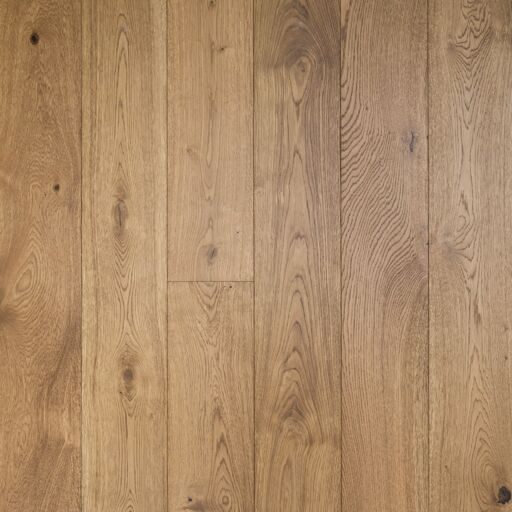
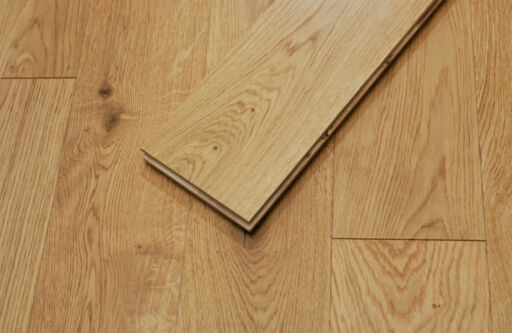
Tradition Engineered Oak Flooring, Rustic, Lacquered, RLx150x18mm
£37.00 £44.40 per sqm Inc. VAT Ex. VAT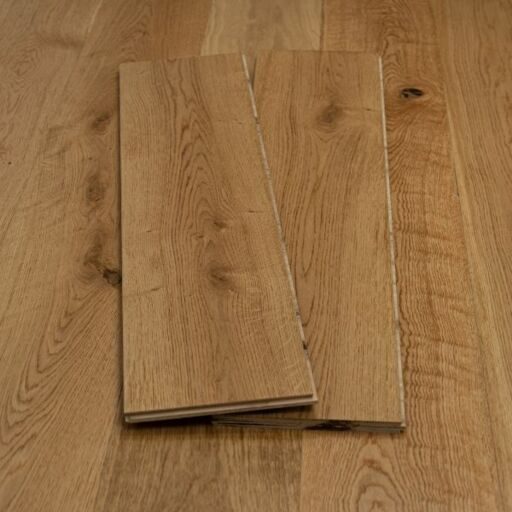
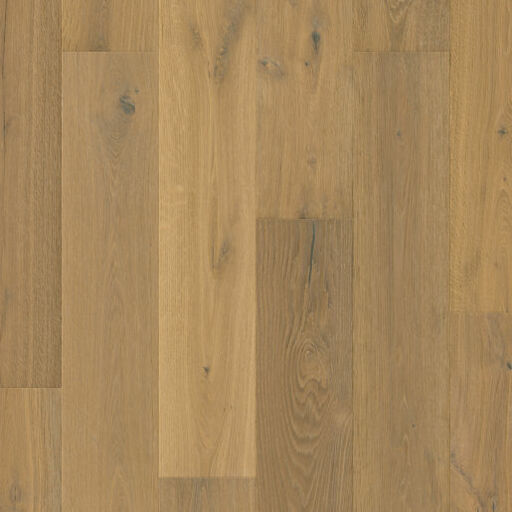
Elka Avon Oak Engineered Flooring, Brushed & Oiled, 190x13x1820mm
£41.20 £49.44 per sqm Inc. VAT Ex. VAT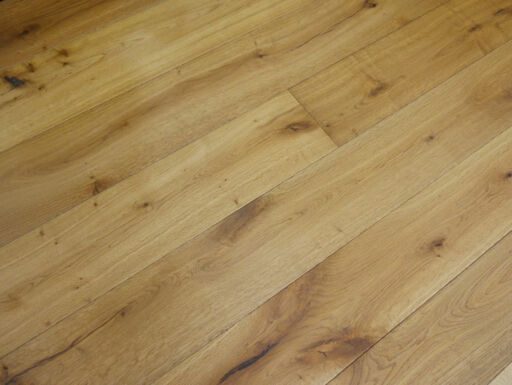
Tradition Vintage Smoked Engineered Oak Flooring, Distressed, Brushed & Oiled, 190x14x1900mm
£37.99 £45.59 per sqm Inc. VAT Ex. VATEngineered wood flooring pairs a real wood veneer with a multi-ply core, so you get the look and feel of solid wood with better resistance to temperature and humidity changes that cause solid boards to move. Our range spans oak, walnut and ash, in thicknesses from 7mm up to 21mm, with wear layers from under 1mm up to 6mm, from a mix of UK and European brands.
Choosing a thickness and wear layer
The wear layer is the top layer of real wood that can be sanded back if the floor gets scuffed or dull over time. Boards with a 4mm or thicker wear layer can typically be refinished two or three times over their life, which is worth factoring in for busy rooms like kitchens or hallways. Thinner wear layers (2mm and under) still give you a genuine wood surface, but they're a better match for lower-traffic rooms like bedrooms, since there's less material to work with if you ever want to refinish.
Finishes
Lacquered boards have a sealed, low-maintenance surface that's easy to wipe clean, which is why they're common in kitchens and family areas. Oiled finishes sit closer to the wood's natural colour and grain and feel warmer underfoot, though they need occasional reoiling and are easier to spot-repair if a section gets scratched. Matt lacquer splits the difference: the protection of a sealed finish with less shine than a standard gloss lacquer.
Fitting
Most boards in this range use a click system, which locks planks together without nails, glue or staples and is realistic for a confident DIY installation. Tongue-and-groove is the more traditional method, glued or nailed depending on the subfloor, and tends to be the choice for solid wood or where a fully rigid, permanent floor is wanted. Engineered boards up to around 190mm wide are generally the safer choice over underfloor heating, since narrower boards expand and contract less than wide ones as the subfloor temperature shifts.
Where it works
Because the multi-layer core is more dimensionally stable than solid wood, engineered flooring copes better with the humidity swings you get in kitchens and bathrooms, though very wet areas still call for a waterproof floor rather than any wood-based option. In living rooms, hallways and bedrooms, it's a straightforward fit, and patterns like herringbone and chevron are widely available in engineered construction if you want that look without the cost or fitting complexity of solid parquet.
Samples and ordering
Free samples are available by post, or you can see the full range at our NW2 North London showroom, open Monday to Saturday, 8am to 5pm. We've supplied London homes with real wood flooring for over 20 years and offer trade accounts alongside standard online ordering.
FAQ
Is engineered wood flooring suitable for underfloor heating?
Yes, in most cases. The multi-layer core is more stable than solid wood under heat, and boards no wider than around 190mm perform best.
How many times can engineered wood flooring be sanded and refinished?
It depends on the wear layer thickness. Boards with a 4mm or thicker top layer can usually be refinished two to three times; thinner wear layers offer less scope for sanding.
What's the difference between click and tongue-and-groove fitting?
Click systems lock together without adhesive and suit DIY installation. Tongue-and-groove is glued or nailed and gives a more permanent, rigid floor, often preferred for solid wood.