

Commercial Flooring Buyer's Guide: Durability, Safety and Maintenance
Selecting appropriate commercial flooring solutions demands careful consideration of multiple factors beyond aesthetics. Your choice directly impacts operational efficiency, employee safety, customer experience and long-term expenditure. Businesses face distinct regulations, climate considerations and foot traffic patterns that differ significantly from residential settings. Whether you manage a bustling retail environment, corporate office or industrial warehouse, understanding durability specifications, safety compliance and maintenance protocols ensures optimal performance and cost-effectiveness throughout your flooring's lifespan.
Durability Considerations for Commercial Spaces
Traffic Classification Systems
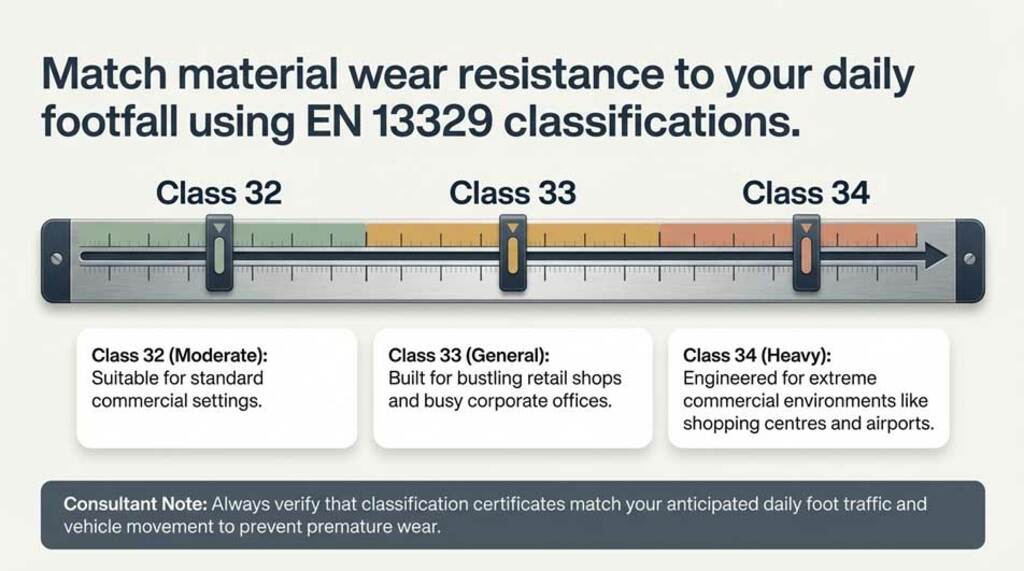
Commercial flooring products are rated according to European Classification Systems (EN 13329). These classifications measure wear resistance and suitability for specific environments. Class 34 flooring handles heavy commercial traffic, including shopping centres and airports. Class 33 suits general commercial use like offices and retail shops. Class 32 manages moderate traffic in commercial settings. Understanding these ratings prevents premature wear, expensive replacements and operational disruptions. Always verify that classification certificates match your anticipated daily foot traffic and vehicle movement.
Material Strength and Lifespan
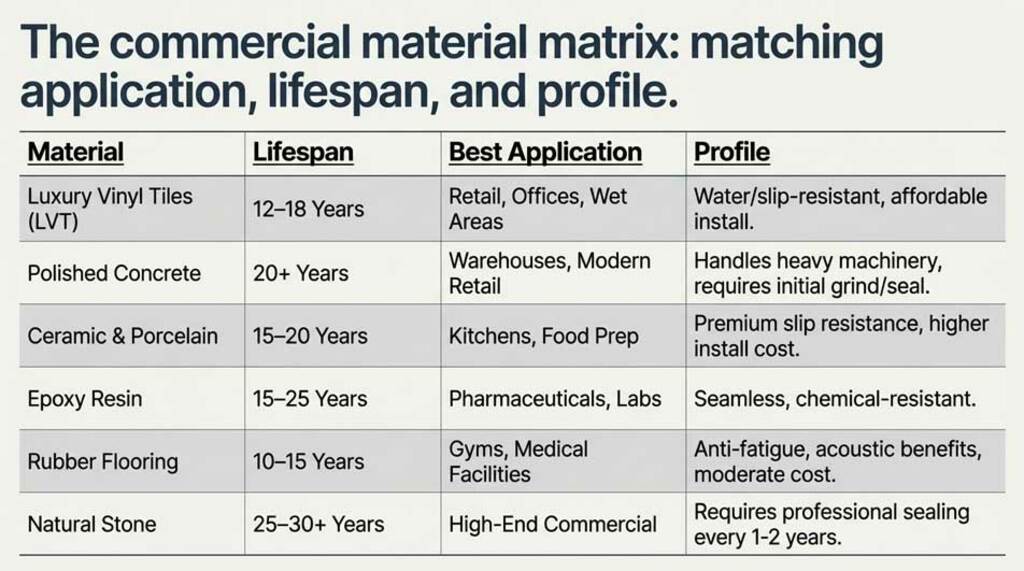
Different commercial flooring materials offer varying durability profiles. Polished concrete withstands heavy machinery and forklift traffic, lasting 20+ years with minimal maintenance. Vinyl composite tiles (VCT) provide 10-15 years of durability in moderate-traffic environments. Ceramic tiles maintain performance for 15-20 years in retail settings. Epoxy resin systems excel in warehouses, lasting 15-25 years. Luxury vinyl plank (LVP) offers 12-18 years lifespan in commercial applications. Natural stone requires professional sealing but delivers 25-30+ years longevity. Select materials based on realistic traffic projections rather than optimistic scenarios.
Safety Standards and Compliance
Slip Resistance Requirements
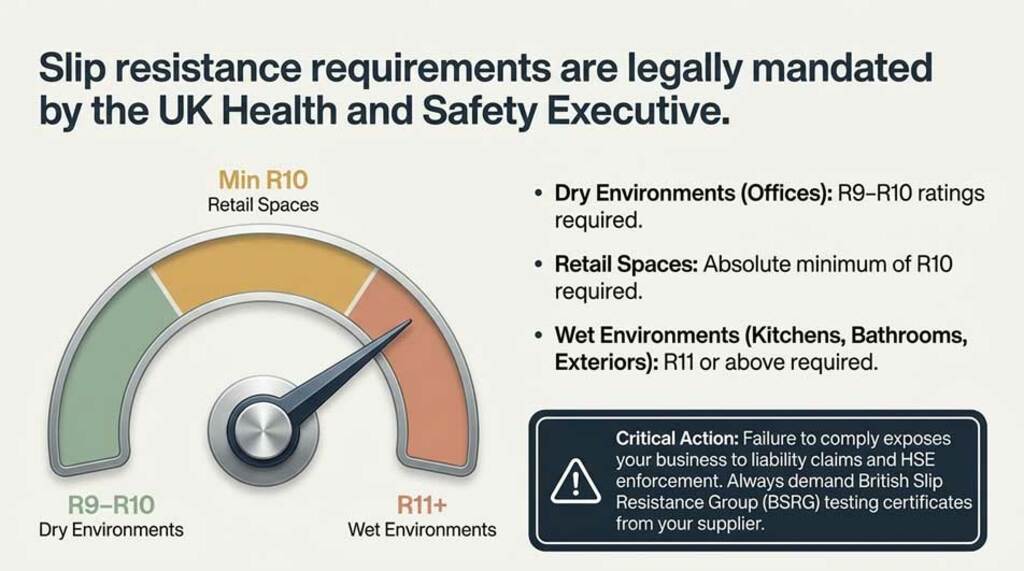
The UK Health and Safety Executive mandates slip resistance testing under ISO 13287 standards. Commercial flooring must achieve adequate slip potential ratings depending on environment. Wet environments like kitchens, bathrooms and external areas require higher slip resistance ratings (R11 or above). Dry environments such as offices can use R9-R10 ratings. Retail spaces typically need R10 minimum. Failure to meet slip resistance standards exposes businesses to liability claims, HSE enforcement action and reputational damage. Always request British Slip Resistance Group (BSRG) testing certificates from suppliers.
Fire Safety and Building Regulations
UK Building Regulations (Part B) specify fire performance requirements for commercial flooring. Products require Euroclassification testing (EN 13823 and EN ISO 9239-1). Most commercial flooring must achieve B-s1, d0 or C-s2, d1 minimum ratings. Some applications, particularly in communal areas and escape routes, demand A1-fl or A2-s1, d0 classifications. Non-compliant flooring creates serious fire hazards and breaches building regulations. Request Euroclassification certificates before purchase and verify your specific application requirements with your building control officer.
Key Maintenance and Lifecycle Factors
Cleaning and Protective Strategies
Effective maintenance extends the flooring's lifespan significantly. Vinyl and concrete surfaces benefit from daily vacuuming and weekly wet mopping with pH-neutral cleaners. Stone flooring requires specialist sealants reapplied every 1-2 years. Carpet tiles demand professional extraction cleaning quarterly. Epoxy systems need dust mop sweeping and occasional damp mopping. Establish documented maintenance schedules and train staff properly—poor cleaning practices damage even premium installations prematurely. Budget 15-25% of the initial flooring cost annually for professional maintenance services.
Repair and Replacement Considerations
Modular flooring systems (tiles, planks, carpet squares) allow targeted repairs without full replacement. Monolithic surfaces (polished concrete, seamless epoxy) require section restoration if damaged. Consider accessibility for future maintenance—flooring installed over underfloor heating systems or cable management needs careful planning. Select suppliers offering spare stock or matching products for 10+ years post-installation. Warranty terms vary significantly; premium installations often include 5-10 year manufacturer guarantees covering defects, but rarely wear.
Essential Flooring Options for Commercial Environments
Popular Commercial Flooring Solutions
- Luxury Vinyl Tiles (LVT): Water-resistant, durable, slip-resistant, affordable installation, 12-18 year lifespan, suitable for retail, offices and wet areas
- Polished Concrete: Highly durable, minimal maintenance, excellent for warehouses and modern retail, 20+ years, requires initial investment in grinding and sealing
- Ceramic and Porcelain Tiles: Premium slip resistance, suitable for kitchens and food preparation, exceptional durability 15-20 years, more expensive installation
- Epoxy Resin Systems: Chemical-resistant, seamless, perfect for pharmaceuticals and laboratories, 15-25 year lifespan, specialised installation required
- Rubber Flooring: Excellent acoustic properties, anti-fatigue benefits, ideal for gyms and medical facilities, 10-15 years durability, moderate cost
Installation and Substrate Preparation
- Subfloor moisture testing (BS 8203) prevents adhesion failure and mould growth
- Levelling compounds ensure proper product performance across uneven surfaces
- Ambient temperature control during installation prevents expansion/contraction issues
- Professional installation by certified contractors maintains warranty validity
- Adequate curing time (typically 48-72 hours) before normal operations resume
Cost Analysis and Budget Planning

Commercial flooring investments span a considerable range. Budget £25-50 per square metre for basic vinyl solutions. Mid-range ceramic and quality LVT flooring range £40-100 per square metre. Premium options like polished concrete, epoxy or natural stone reach £80-200+ per square metre. Installation typically adds 30-50% to material costs. Avoid selecting flooring based solely on initial purchase price; calculate total cost of ownership over 15-20 years, including maintenance, repairs, replacement and operational downtime. Premium flooring, reducing maintenance requirements, often proves more economical long-term.
Selecting Your Commercial Flooring Provider
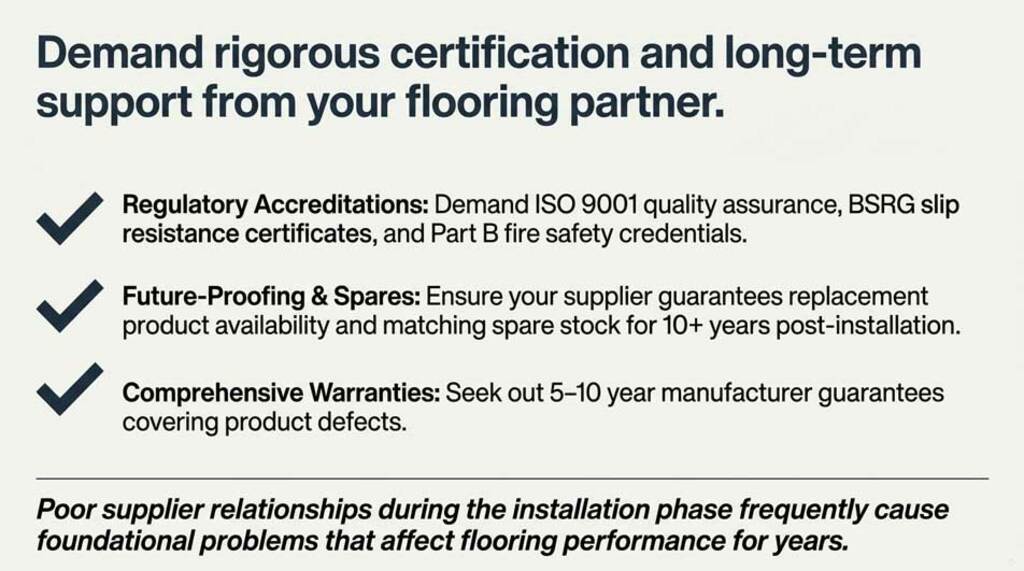
Partner with suppliers holding relevant certifications: ISO 9001 quality assurance, BSRG slip resistance accreditation, and fire safety compliance credentials. Request references from similar commercial environments. Ensure providers offer comprehensive warranties, maintenance support and replacement product availability. Obtain detailed specifications including durability ratings, safety certifications, maintenance protocols and lifecycle projections. Poor supplier relationships during installation frequently cause problems affecting flooring performance for years.
Final Considerations
Commercial flooring decisions significantly impact business operations, safety, and finances. Prioritise durability, matching your specific traffic levels, ensure full safety compliance with regulations, and implement robust maintenance programmes. Balance initial investment against long-term value. Engage experienced suppliers familiar with your industry's particular requirements. Proper planning and informed selection deliver reliable, safe, compliant flooring supporting your commercial operations effectively for many years.