

Everything You Need to Know About Engineered Wood Flooring
Engineered wood flooring has become increasingly popular across homes as a practical alternative to solid hardwood. Unlike traditional solid wood, engineered wood consists of a real hardwood veneer bonded to a plywood base. This construction method gives it superior stability and makes it ideal for the UK's variable moisture and temperature conditions.
The cross-grain plywood foundation prevents the expansion and contraction that solid wood experiences, making engineered wood flooring properties particularly well-suited for kitchens, bathrooms, and basements where humidity fluctuates. This innovation doesn't compromise on aesthetics—the authentic wood surface layer provides the same luxurious appearance as solid hardwood at a fraction of the cost.
Key Advantages of Engineered Wood Flooring
Understanding the benefits helps you make an informed decision about whether engineered wood flooring is right for your home.
- Moisture Resistance: The engineered construction provides excellent stability in damp environments, making it suitable for kitchens and utility rooms
- Underfloor Heating Compatible: Unlike solid wood, engineered options work brilliantly with underfloor heating systems throughout your property
- Cost-Effective: Engineered wood flooring options are more affordable than solid hardwood, whilst maintaining genuine wood authenticity
- Installation Flexibility: Can be installed via floating, glued, or nailed methods, offering versatility for different subfloor types
- Durability: High-quality engineered flooring withstands heavy foot traffic and daily wear exceptionally well
- Sustainability: Uses less hardwood than solid alternatives, making it a more environmentally conscious choice
Engineered Wood Flooring Construction Explained
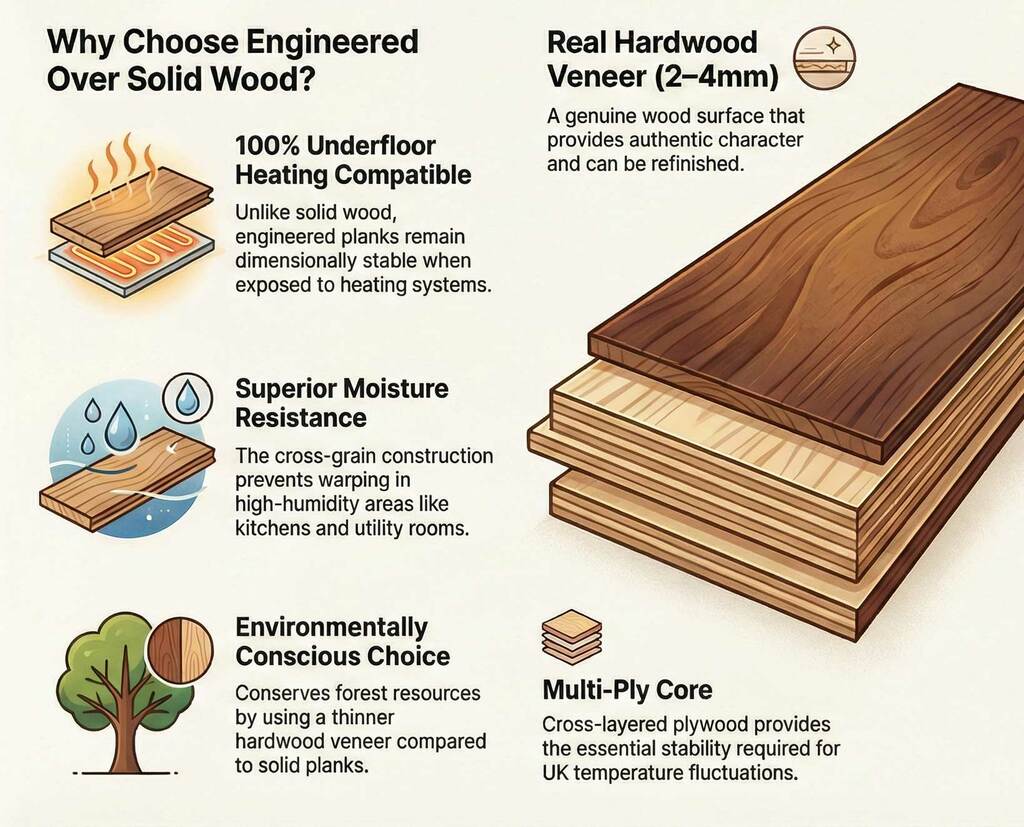
Recognising the layers within engineered wood flooring products helps you understand quality variations and pricing differences.
The Veneer Layer
The top layer is genuine hardwood veneer—typically 2-4mm thick—which determines the flooring's appearance and character. This genuine wood surface can be sanded and refinished, though fewer times than solid wood. Premium engineered wood flooring brands use thicker veneers for enhanced longevity.
The Core Structure
Beneath the veneer sits a plywood base, usually 6-9mm thick, constructed from multiple cross-grain layers. This cross-ply arrangement provides dimensional stability and prevents warping. The quality of this core significantly impacts durability and price—higher specifications use more plies and superior adhesives.
Backing Layer
The bottom backing prevents moisture ingress from below and provides additional stability. Quality engineered wood flooring products feature specially treated backing that resists humidity absorption.
Top Engineered Wood Flooring Brands
Several trusted manufacturers deliver reliable engineered wood flooring solutions. When selecting your flooring, considering established brands ensures warranty support and consistent quality.
Boen
Boen engineered wood flooring products - combine Scandinavian craftsmanship with modern design. Their collections feature various wood species and finishes, with options suitable for underfloor heating. Boen's attention to detail in construction and finishing makes them a premium choice for homeowners seeking durability.
Elka
Elka engineered wood flooring provides excellent value without compromising quality. Their range includes contemporary and traditional designs, with strong performance in moisture-resistant applications. Elka's solid construction makes them popular for both residential and commercial properties.
Kahrs
Kahrs represents the premium end of the engineered wood flooring market. Swedish heritage combines with innovative manufacturing, producing exceptionally stable and beautifully finished products. Their engineering expertise ensures superior dimensional stability, particularly valuable for heated properties.
Tradition Classics
Tradition Classics offers characterful engineered wood flooring solutions with authentic finishes and textures. Their commitment to sustainable sourcing and quality craftsmanship appeals to environmentally-conscious homeowners seeking traditional aesthetics with modern reliability.
Installation Methods for Engineered Wood Flooring
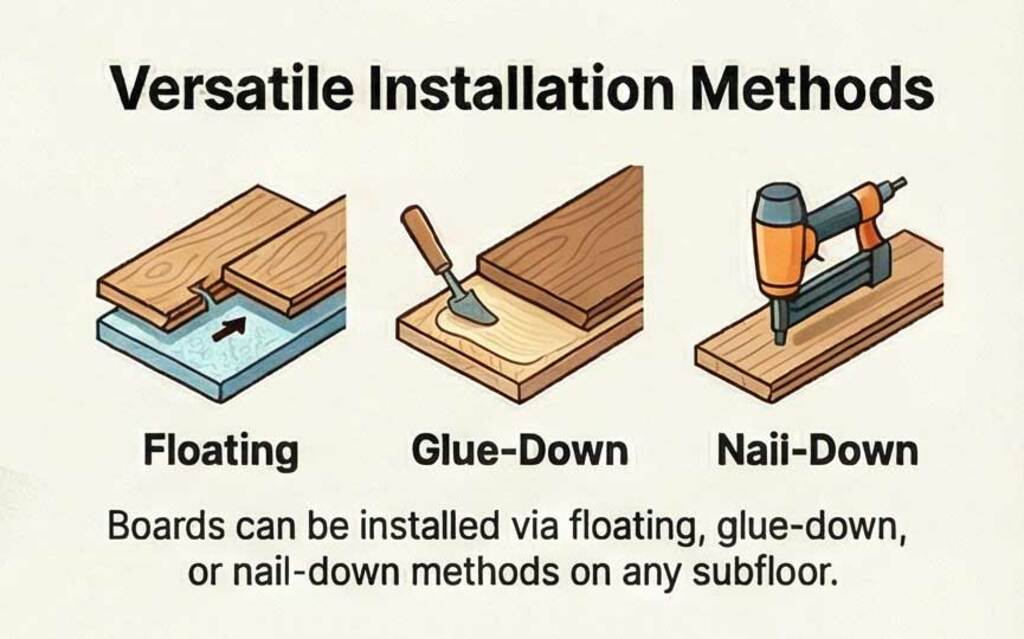 The installation approach you choose affects cost, timeline, and suitability for your property. Engineered wood flooring products accommodate multiple installation methods.
- Floating Installation: The flooring sits loosely over an underlay without attachment to the subfloor. This method suits uneven subfloors and allows for easy removal. It's the quickest installation approach and works well with underfloor heating systems.
- Glue-Down Installation: Adhesive bonds the flooring directly to the subfloor. This creates excellent stability and suits high-traffic commercial areas. Requires careful subfloor preparation and longer curing times.
- Nail-Down Installation: Traditional method of securing flooring through nails into timber subfloors. Delivers permanent installation but requires specialist skills and suitable subfloor construction.
Costs and Value Considerations
Budget planning requires understanding both material and labour expenses for engineered wood flooring projects. Material costs vary significantly by brand and specification. Budget ranges typically span £20-60 per square metre for flooring boards, though premium engineered wood flooring products from Kahrs or Boen may exceed this. Installation labour varies between £15-35 per square metre, depending on method complexity and regional rates.
When calculating total project cost, factor in subfloor preparation (£5-15 per square metre), underlays (£3-8 per square metre), and finishing touches like trim and skirting boards. Many homeowners find engineered options deliver superior value compared to solid hardwood, especially when considering the reduced refurbishment costs over the flooring's lifetime.
Durability and Maintenance of Engineered Wood
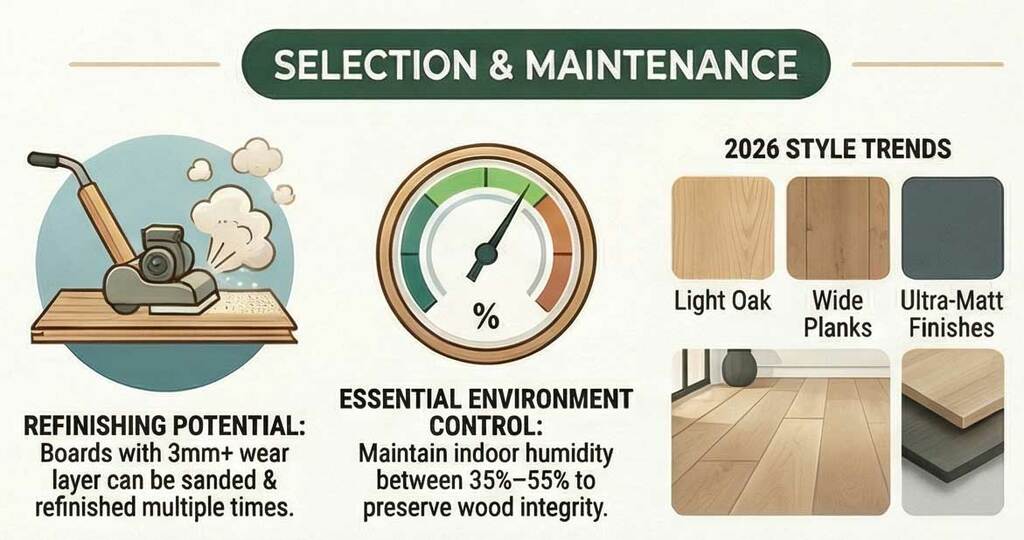 Proper care extends your engineered wood flooring investment significantly. Quality engineered wood flooring products typically last 20-30 years with appropriate maintenance. The cross-ply construction provides inherent durability superior to solid wood in moisture-prone environments. Daily sweeping prevents grit accumulation, whilst occasional damp mopping maintains cleanliness without excess moisture.
Modern engineered wood flooring products often feature protective finishes—lacquers, oils, or waxes—that minimise surface damage. Avoid prolonged water exposure and excessive heat, and use protective pads under furniture legs. Some premium engineered wood flooring collections can be lightly sanded and resealed if surface wear appears, though options are fewer than with solid wood.
Environmental and Sustainability Aspects
Modern engineered wood flooring products represent a responsible choice for environmentally aware homeowners. Using thinner hardwood veneers whilst maintaining genuine wood authenticity conserves forest resources compared to solid hardwood requirements. Many manufacturers, including those in our recommended brands, source wood responsibly and maintain FSC certification.
The durability of quality engineered wood flooring options means fewer replacements over time, reducing overall environmental impact. Additionally, modern manufacturing processes increasingly employ eco-friendly adhesives and finishes, improving sustainability credentials.
Choosing Between Engineered and Solid Wood
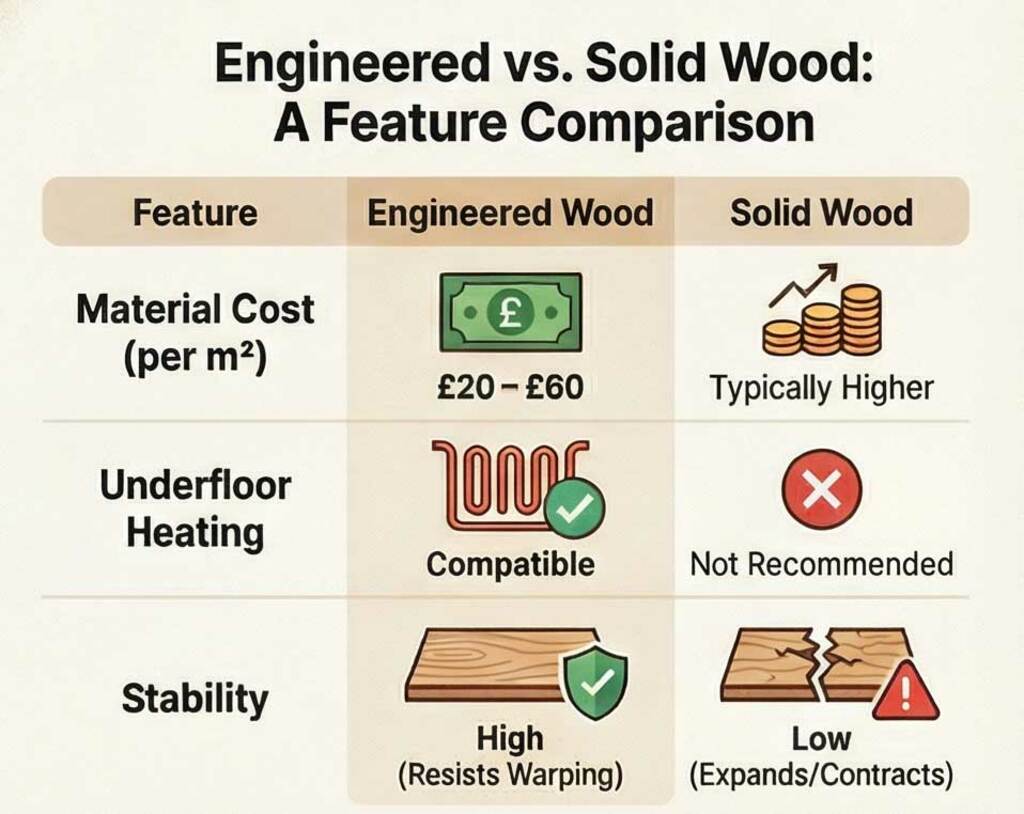 Your decision should reflect your specific circumstances. Engineered wood flooring suits properties with:
- Kitchens, bathrooms, or ground-floor installations where moisture varies
- Underfloor heating systems that require dimensional stability
- Budget constraints without sacrificing authentic wood aesthetics
- Basements or cellars where humidity monitoring proves challenging
- Properties on suspended timber floors are prone to movement
Solid hardwood remains preferable if you prioritise maximum refinishing options, value traditional construction, and maintain stable humidity and temperature throughout your property.
Final Thoughts on Engineered Wood Flooring
Engineered wood flooring represents a mature, reliable flooring solution combining genuine wood beauty with practical performance characteristics. Whether you select Boen's Scandinavian excellence, Kahrs' premium engineering, Elka's value proposition, or Tradition Classics' characterful finishes, engineered wood flooring delivers lasting satisfaction when quality products receive appropriate installation and maintenance.
Take time evaluating colour schemes, wood species, and finishes against your interior design vision. Request samples from multiple brands and compare specifications carefully. With informed selection and professional installation, engineered wood flooring provides a sophisticated, durable floor transforming your home's interior for decades.