

How to Order Flooring Supplies in Bulk for Trade
Buying for trade is a different game to buying for a single domestic job. Get the process right — from calculating quantities to managing delivery logistics — and you save time, cut waste, and protect your margin on every project.
Setting Up a Trade Account
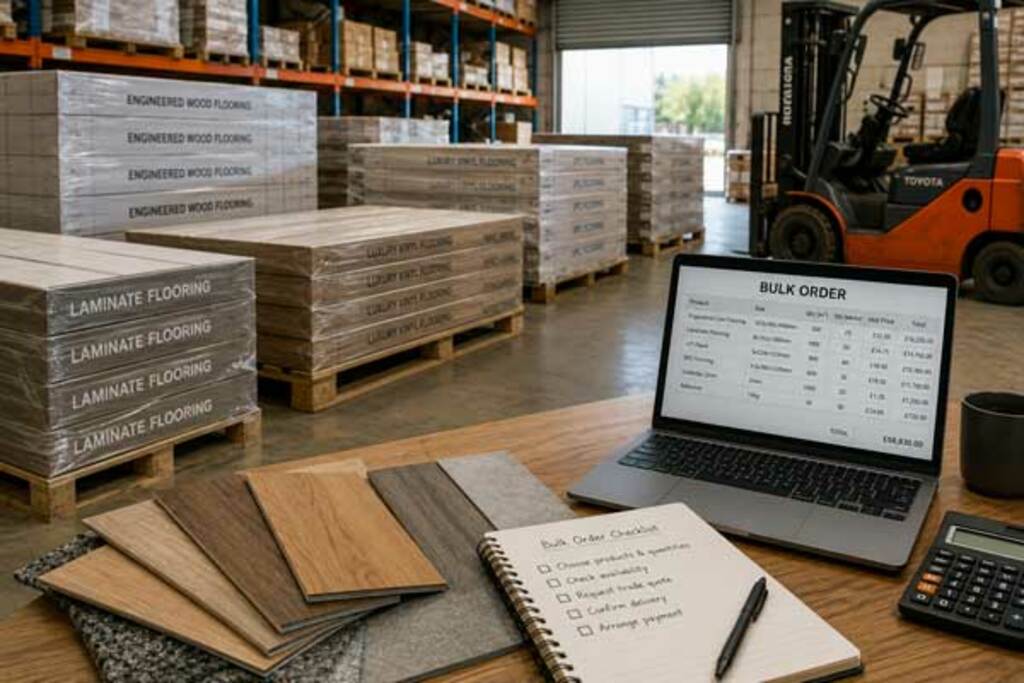 The first move for any flooring contractor or trade buyer is to set up a formal trade account with your main supplier. A trade account usually gets you better pricing, extended payment terms, a dedicated account manager, and the ability to place orders fast without going through a full checkout each time.
Setting one up typically means supplying your business registration details, a VAT number, and references from other trade suppliers. Some suppliers also ask for a rough annual spend or the type of projects you usually run — that information helps them put you on the right pricing tier and gives you a more relevant service.
Once the account's live, ask for a full price list including trade discounts, and check our bulk pricing for larger orders. It's worth comparing this against other suppliers too — sticking with one supplier is convenient, but having two or three accounts gives you pricing leverage and a safety net if one of them runs short on stock.
Calculating Quantities for Bulk Orders
Getting the quantity right matters more at scale. Order too little and you're facing delays and the risk of a batch mismatch; order too much and you've got cash tied up in stock that might never get used. A systematic approach keeps both risks down:
- Measure each room accurately — length times width, plus any alcoves or irregular sections
- Add a wastage allowance: 10% for straight lays, 15% for diagonal or herringbone patterns, and up to 20% for rooms with a lot of cuts or unusual shapes
- Order from the same batch or lot number wherever you can, to keep colour consistent across the project
- Check pack sizes and work out how many full packs you need, rounding up rather than down
- Cost underlay, adhesive, threshold bars and other ancillaries separately from the flooring itself
On multi-room projects, calculate each room individually and add the totals together — don't average across rooms, since that throws the numbers off badly if room shapes vary much.
Managing Delivery for Trade Orders
Bulk deliveries bring logistical headaches a single pack order never does. Pallets of flooring are heavy and need proper access and handling equipment on site. Before placing a large order, it's worth confirming with your supplier:
Delivery format — pallets or individual packs? Palletised delivery needs a forklift or pallet truck on site. If you haven't got either, arrange a split delivery instead, or check whether tail-lift delivery is an option.
Lead times — in-stock items usually arrive within a few working days, but anything on special order or coming from a European manufacturer can take two to four weeks. Build that into your project schedule so you're not sitting on a ready site waiting for stock.
Site access — large delivery vehicles need unrestricted access, and you'll want a clear, dry area to unload and store the flooring until it's needed.
Storing Flooring on Site
Anything delivered ahead of schedule needs storing properly. All wood-based flooring has to sit flat, off the ground, in a dry environment, within the temperature range the manufacturer specifies. Stack packs no more than five high, or the weight starts warping the packs underneath.
Give the flooring at least 48 hours to acclimatise to site conditions before laying it — longer for solid wood. Lay flooring that hasn't acclimatised in a heated building and you're looking at gapping or buckling once the boards adjust to the room's actual temperature and humidity.
Get the planning and the supplier relationship right, and bulk ordering becomes just another straightforward part of running a flooring trade business profitably.