

LVT Flooring: A Complete Buying Guide
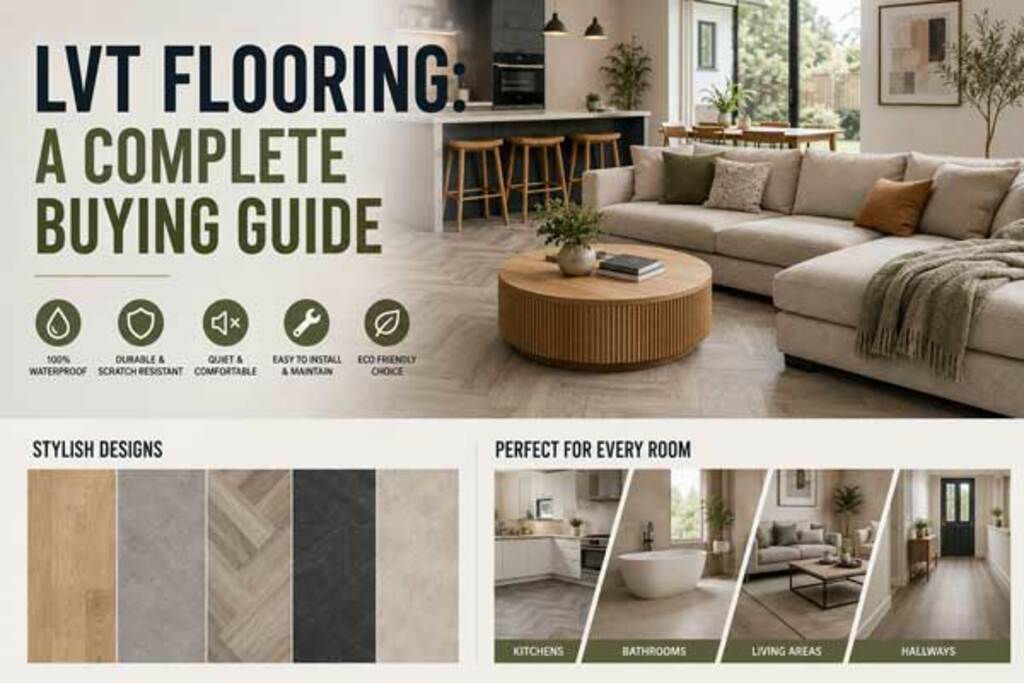 Luxury vinyl tile has become one of the most popular flooring categories in the UK market over the past decade, and the reasons are clear. It's waterproof, relatively warm underfoot, available in a wide range of wood and stone effects, and tolerant of conditions that would damage real wood or stone. For the right application, it offers genuine value and practical performance.
But the LVT market has also grown more complex, with a widening range of core types, wear layer thicknesses and installation systems. Understanding the key differences between products before you buy prevents disappointment and ensures the floor performs as expected in your specific conditions.
Understanding the LVT Construction
All LVT products share the same basic construction: a stable backing layer, a printed design layer carrying the wood or stone image, and a wear layer on top protecting the design from abrasion. The quality and characteristics of each layer determine how the product performs.
The wear layer is measured in millimetres or microns. A residential wear layer of 2mm is adequate for moderate home use, but products in the 2.5mm to 5mm range, such as LG Hausys Decotile 55 or Polyflor Camaro Loc, give noticeably better durability and suit hallways and kitchens well.
The core layer distinguishes different LVT types. Traditional flexible LVT has a relatively thin, flexible core. SPC (stone plastic composite) has a rigid core made from limestone powder and PVC, which makes it dimensionally very stable and suitable over slightly uneven subfloors. Each core type has different performance characteristics and installation requirements.
Flexible LVT vs SPC
Flexible LVT — such as our LG Hausys Decotile and Polyflor Affinity ranges — uses a relatively thin, flexible construction, glued directly to the subfloor with an appropriate adhesive. The advantage is a very stable, flat result that feels solid underfoot. The disadvantage is that it needs a very flat, clean subfloor, and glue-down installation is more labour-intensive and less reversible than a click system.
SPC flooring — such as our QuickStep Alpha Vinyl and Xylo Greenwich SPC ranges — uses a rigid click-together system. It installs quickly, needs no adhesive, and can be lifted and reinstalled if needed. The rigid core forgives minor subfloor imperfections, and its dimensional stability means it's less affected by temperature changes than flexible LVT. SPC has become the dominant format in the UK retail market for these practical reasons.
Underfloor Heating Compatibility
Most LVT products are compatible with underfloor heating within stated temperature limits. Floor surface temperature shouldn't exceed 27–28°C for most LVT; going beyond this can cause the material to expand, buckle or develop gaps over time. The subfloor beneath LVT over underfloor heating needs to be flat and well bonded to prevent movement.
When installing SPC click LVT over underfloor heating, allow adequate expansion gaps at room perimeters and around fixed obstacles. Temperature cycling causes the boards to expand and contract, and insufficient expansion allowance can cause the floor to buckle in warm conditions.
Surface Quality and Appearance
LVT design quality varies considerably between manufacturers and price points. At the premium end, ranges like LG Hausys Decotile 55 and Polyflor Camaro Wood use high-resolution printed designs with deep embossed textures that closely replicate real wood or stone. The repeat pattern length (how far before the same image repeats) is generally longer in premium products, reducing the visual repetition that can make budget LVT look artificial.
Visiting a showroom or ordering full-size samples is the only reliable way to assess LVT design quality. Small tile samples don't convey how the repeat pattern reads across a full floor area. Budget LVT can look acceptable in small samples but noticeably artificial in a completed installation once the pattern repetition becomes visible.
Choosing the Right Format
- Glue-down flexible LVT: best for commercial use and where maximum stability is required
- SPC click LVT: best for most residential applications, easy installation, reversible
- 2mm wear layer: suitable for low-traffic bedrooms and utility rooms
- 2.5mm to 4mm wear layer: good general residential specification
- 5mm or 6mm wear layer: recommended for hallways, kitchens and busier households
- SPC ranges from QuickStep and Xylo: premium build with strong design quality and warranties
LVT is a practical, good-performing product in the right applications. It's not a substitute for real wood in every situation, and it doesn't age the same way real wood does, but for kitchens, bathrooms, hallways and busy family rooms, a well-specified LVT product from a quality manufacturer gives you a floor that looks good and performs reliably for years.