

How to Remove Scratches from Wood Floors
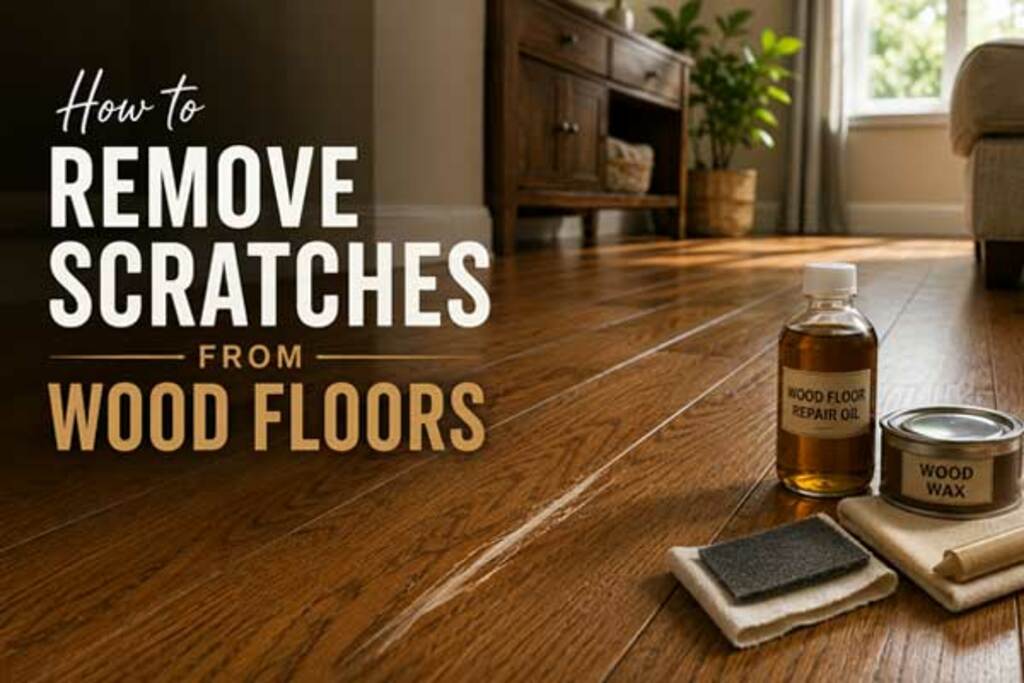 Scratches on a wood floor range from barely visible surface marks to deep gouges that catch the light from across the room. How you approach a scratch repair depends on its depth, the finish on the floor, and the species and colour of the wood. Not every scratch needs professional attention, and understanding the right repair method for different types of damage prevents unnecessary expense and stops you making the situation worse.
Surface Scratches on Oiled Floors
Surface scratches on a hardwax oil finished floor are among the easiest damage types to address. Because the oil penetrates the wood rather than forming a film on top of it, light scratches in an oiled floor often look more alarming than they are. The scratch disrupts the oil in a small area, making it look lighter or slightly rougher compared to the surrounding surface.
For minor surface scratches on a floor finished with Osmo's Wood Wax Finish, clean the area thoroughly, allow it to dry, then apply a small amount of the same product to the scratched area with a cloth or small brush. Work it into the grain and wipe away the excess. In most cases, the scratch will disappear or become significantly less visible as the fresh oil blends with the existing finish. Allow the area to dry for 12 hours before use.
For floors finished with Bona's Hardwax Oil, the repair process is similar: clean the area, apply a small amount of the matching product, work it in, then buff off the excess.
Surface Scratches on Lacquered Floors
Surface scratches on lacquered floors are more challenging to repair invisibly than scratches on oiled floors. The lacquer film sits on top of the wood, and any new lacquer applied to a localised area sits at a slightly higher level with a potentially different sheen than the surrounding aged lacquer. Truly invisible lacquer repairs take skill and the right products.
For very fine surface scratches that haven't broken through to bare wood, a light application of a floor polish such as LOBA's PermanentCare can reduce the visibility of the mark by filling the scratch channel. These are cosmetic solutions rather than true repairs and may need reapplying periodically.
Deeper Scratches and Gouges
Scratches that cut through the finish into bare wood need more comprehensive treatment. For localised damage like this, a colour-matched wood filler is the first step. Products like Morrells' wax filler sticks and Touch-Up Dye Pens are available in a range of wood tones and can be blended to get a close colour match. Fill the scratch, allow it to dry, sand back flush with fine-grit paper, then apply the appropriate finish over the repaired area.
Deep gouges that have displaced wood fibres below the floor surface may need more substantial repair. In extreme cases, a section of board can be routed out, and a patch let in using matching timber. This needs professional skill but is a significantly less expensive option than full floor replacement when only a small area is damaged.
Worn Areas in Traffic Paths
Where the finish has worn through along traffic paths, exposing bare wood, cleaning products can penetrate the exposed wood and cause grey staining. Addressing this before staining occurs matters. For oiled floors, applying a maintenance coat of Osmo's Maintenance Oil to the worn area, feathered into the surrounding intact finish, can restore protection without a full sanding.
- Surface scratches on oiled floors: apply matching hardwax oil locally and buff
- Surface scratches on lacquered floors: floor polish as a cosmetic treatment
- Deep scratches to bare wood: colour-matched filler, sand back, refinish locally
- Worn traffic paths: a maintenance oil coat on oiled floors, a fuller reassessment on lacquered floors
- Oiled floors are generally more repairable locally than lacquered floors
The fundamental truth about wood floor scratch repair is that oiled floors offer much better local repair potential than lacquered floors. This is one of the strongest practical arguments for an oil finish on floors in busy family homes, where scratches and isolated damage are inevitable over time. Near-invisible repairs are genuinely achievable on oiled floors; on lacquered floors, they're much harder to pull off without some evidence of the repair remaining.