

The Best Flooring Options for Period Homes
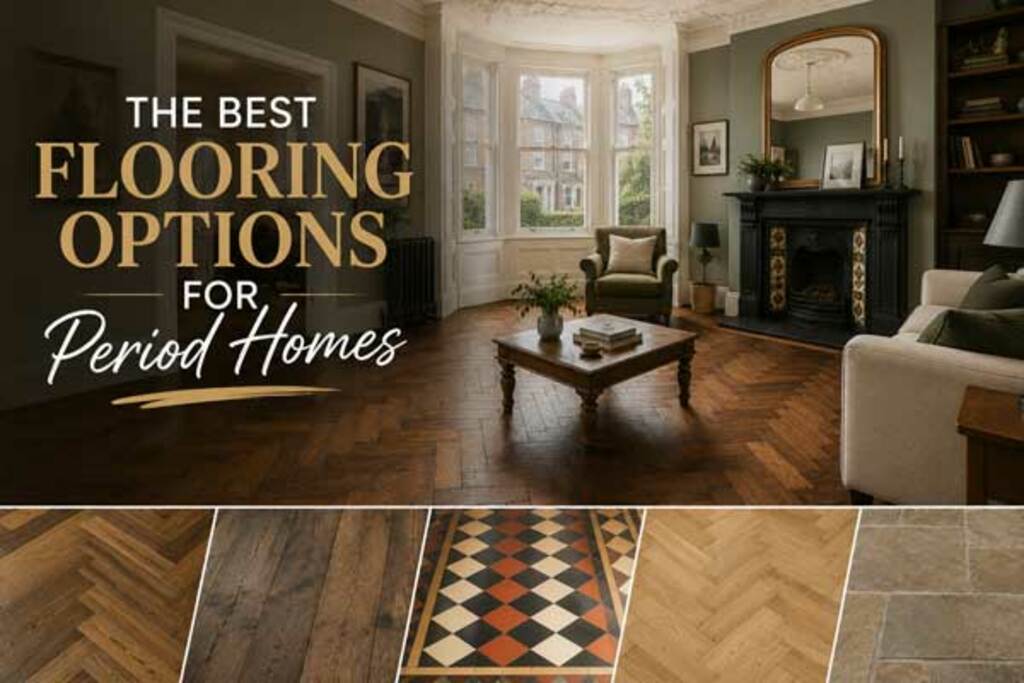 Period homes from the Victorian, Edwardian and Georgian eras were built with specific materials, proportions and details that create their distinctive character. Flooring choices that ignore this context can undermine a period interior, even when the floor itself is technically well installed. Getting the right floor in an older property means understanding what belongs, what looks sympathetic, and what's simply incongruous, however well made it might be.
This guide covers the main flooring categories that work well in period properties, the species and formats most appropriate by era, and the finishes that suit older interiors best.
Original Floorboards and Restoration
Many Victorian and Edwardian homes have original pine or oak floorboards beneath layers of vinyl, carpet or laminate. Before specifying a new floor, it's always worth investigating what lies beneath. Original floorboards in reasonable condition can often be restored to a high standard by sanding, filling gaps, and refinishing with an appropriate product.
Pine boards, common in Victorian terraces and semi-detached properties, respond well to a traditional oil finish or a modern hardwax oil such as Osmo's Wood Wax Finish. The natural colour of pine deepens attractively over time when oiled, and the boards acquire a patina that's genuinely period in character. Lacquers can be used on original pine floors but tend to look more contemporary than the space warrants.
Original oak or elm boards in Georgian farmhouses and country properties are often exceptional pieces of material that reward careful restoration. A specialist floor restorer can open these floors up considerably, and a simple oil or wax finish allows the natural character of the aged timber to remain visible.
Reclaimed Timber
Reclaimed timber floors are appropriate in period properties and genuinely sympathetic to older architecture. Reclaimed oak, elm, pitch pine and antique pine boards carry the marks of previous use, giving them an authenticity that new timber can't replicate regardless of how well it's finished. The variation in colour, patina and texture of reclaimed boards suits the imperfect surfaces and imprecise geometry of old buildings.
Reclaimed boards need careful preparation before installation — cleaned, de-nailed, planed to a consistent thickness, and dried to the appropriate moisture content. Installing reclaimed boards on a properly prepared subfloor, finished with a traditional oil or hardwax oil, produces a result that looks as though the floor has been there for decades.
Parquet and Herringbone
Parquet flooring has been used in British buildings since the seventeenth century and remains one of the most architecturally appropriate choices for period properties. The herringbone pattern in solid or engineered oak blocks at 70mm by 280mm or 70mm by 350mm suits the scale of Victorian and Edwardian rooms particularly well. Larger blocks at 90mm by 450mm suit Georgian and grand Edwardian interiors with high ceilings and large rooms better.
Engineered oak parquet is now the most practical option for most period properties. It offers the appearance of solid parquet with better dimensional stability and compatibility with underfloor heating if that's being added as part of a renovation. Finished with a natural or lightly toned hardwax oil, engineered herringbone oak looks entirely at home in Victorian, Edwardian and Georgian interiors.
Natural Stone and Encaustic Tile
Hallways and kitchen areas in period properties often had stone or encaustic tile floors originally, and restoring or replicating this look is highly appropriate. Victorian geometric encaustic tiles in black and white or multi-coloured patterns are ideal for entrance halls. These are available as new reproduction tiles from various UK suppliers, or as original reclaimed tiles from salvage yards.
Natural stone, whether limestone, slate or quarry tile, suits kitchen extensions, utility rooms and back hallways in period properties. Properly sealed and maintained stone floors are durable and genuinely appropriate to the architecture. A honed or tumbled finish looks more sympathetic in a period context than a polished one.
What to Avoid
Wide-plank engineered boards in species not native to Britain, combined with a very pale or grey wash finish, tend to look conspicuously contemporary in period settings. That's not always inappropriate in a modern extension, but in original Victorian or Georgian rooms it rarely looks as though it belongs. Similarly, laminate flooring and budget vinyl, however practical, generally undermine the character of period spaces in a way that better materials don't.
- Restore original pine or oak boards where possible before replacing them
- Consider reclaimed timber for authentic character
- Herringbone parquet in 70mm by 350mm oak is appropriate for Victorian properties
- Encaustic or geometric tiles suit Victorian entrance halls
- Hardwax oil and traditional oil finishes suit period interiors better than high-gloss lacquer
- Natural stone is appropriate for kitchens and utility areas in older properties
A period property is a significant piece of architectural history, and the floors within it contribute to its character as much as the cornicing, doors and fireplaces. Choosing materials sympathetic to the age and style of the building produces a coherent result. Choosing modern materials for convenience alone tends to diminish the character of a space that warranted preservation in the first place.