

Underfloor Heating and Wood Flooring: Complete Guide
 Combining underfloor heating with wood flooring represents an increasingly popular choice for homeowners seeking warmth, comfort and aesthetic appeal. However, the relationship between heat and wood requires careful consideration to avoid damage, warping or cupping. This comprehensive guide explores everything you need to know about installing wood flooring over underfloor heating systems in the UK.
Wood is a natural material that responds to temperature fluctuations and moisture changes. When underfloor heating is introduced beneath wooden boards, the dynamics shift significantly. The key to success lies in selecting appropriate wood species, understanding moisture content requirements, and following installation best practices that manufacturers recommend.
Why Wood Flooring Works With Underfloor Heating
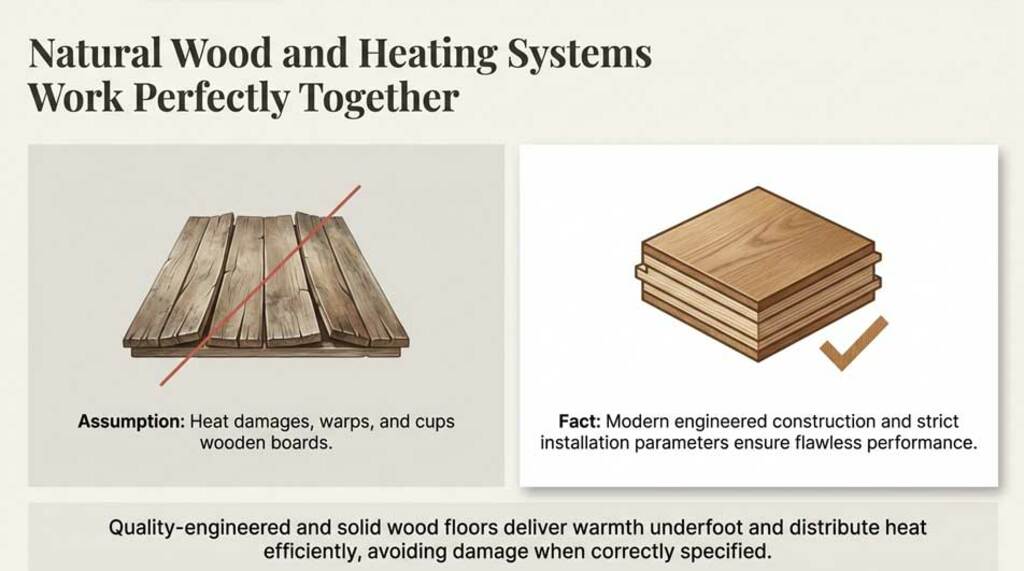
Many people assume wood and underfloor heating are incompatible, but this misconception overlooks modern engineering and proper specification. Quality-engineered and solid wood floors can absolutely perform well over underfloor heating when installed correctly. The warmth underfoot enhances comfort during cold winters, whilst wood's natural insulating properties help distribute heat efficiently throughout rooms.
Wood flooring also adds sophistication and warmth that complements underfloor heating systems. Unlike stone or tile, which can feel cold initially despite heating, wood provides immediate tactile comfort. This combination creates efficient, comfortable living spaces that appeal to contemporary homeowners.
Benefits of the Combination
- Enhanced thermal comfort with natural insulation properties
- Reduced reliance on radiators, freeing up wall space
- Even heat distribution across the entire floor areas
- Lower energy consumption compared to conventional heating
- Improved indoor air quality without radiator dust circulation
- Aesthetic flexibility with diverse wood finishes and colours
- Increased property value through modern heating integration
Choosing the Right Wood for Underfloor Heating
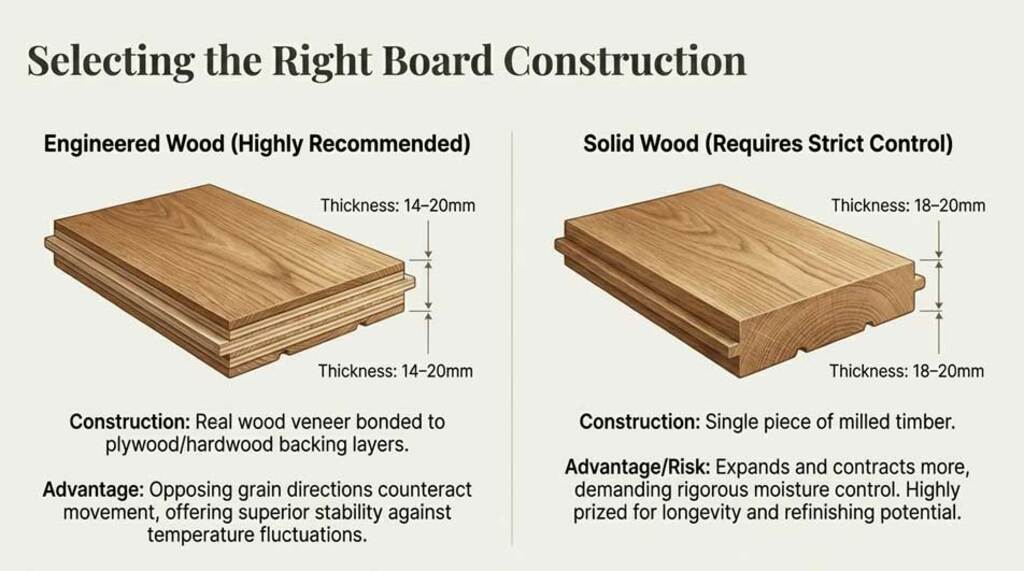
Not all wood performs equally over underfloor heating. Stability becomes paramount when wood experiences consistent warmth from below. Engineered wood offers superior stability compared to solid boards because its layered construction resists movement. However, quality solid wood floors can work when specified correctly.
Engineered Wood Advantages
Engineered wood flooring consists of a real wood veneer bonded to plywood or hardwood backing layers. This construction allows wood to expand and contract minimally, as the opposing grain directions counteract movement. For underfloor heating applications, engineered boards between 14–20mm thick provide optimal stability whilst maintaining authentic wood characteristics.
Solid Wood Considerations
Solid wood floors can work over underfloor heating, though they require thicker boards (typically 18–20mm) and stricter moisture control. Solid wood expands and contracts more than engineered alternatives, making specification more demanding. However, many homeowners prefer the longevity and refinishing potential that solid wood offers.
Recommended Brands for Underfloor Heating Applications

Boen Wood Flooring
Boen engineered wood flooring is specifically designed for demanding installations, including underfloor heating. Their boards feature advanced stability technology and European sourcing standards. Boen's engineered ranges maintain consistent moisture levels whilst the premium veneer thickness allows refinishing. Their underfloor heating compatible collections undergo rigorous testing to ensure performance across temperature variations typical in installations.
Elka Flooring Solutions
Elka produces engineered wood specifically engineered for compatibility with underfloor heating systems. Their construction emphasises dimensional stability, featuring multi-ply backing that resists warping. Elka boards work particularly well in kitchens and bathrooms, where underfloor heating proves most valuable. Their moisture barrier technology protects against humidity fluctuations common in British properties.
Kahrs Wood Flooring
Kahrs represents Swedish engineering excellence with underfloor heating-optimised collections. Their proprietary construction includes moisture regulation systems that accommodate temperature and humidity changes. Kahrs boards are individually graded and manufactured to exacting tolerances, ensuring consistent performance over heating systems. Many installers specify Kahrs for premium residential and commercial underfloor heating projects.
Moisture Content and Preparation
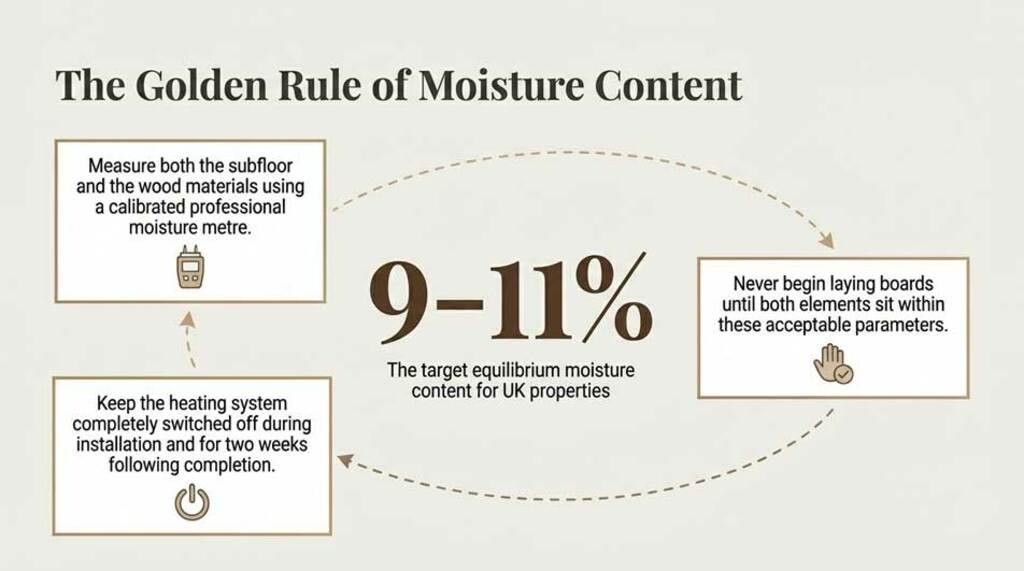
Moisture content represents the single most critical factor when combining underfloor heating with wood flooring. Wood naturally absorbs and releases moisture depending on environmental humidity and temperature. Underfloor heating accelerates these changes, making pre-installation moisture management essential.
Before installation, the subfloor must reach moisture equilibrium appropriate for your property's location. In the UK, equilibrium moisture content typically ranges between 9–11%. Measure moisture in both the subfloor and wood flooring materials using a calibrated moisture metre. Both should sit within acceptable parameters before laying begins.
Heating systems should remain off during installation and for at least two weeks afterwards, allowing wood and subfloor to stabilise. Some manufacturers recommend longer acclimatisation periods. Once heating activates, temperature should increase gradually—roughly 5°C per day—until reachingthe desired operating temperature.
Installation Methods and Subfloor Requirements
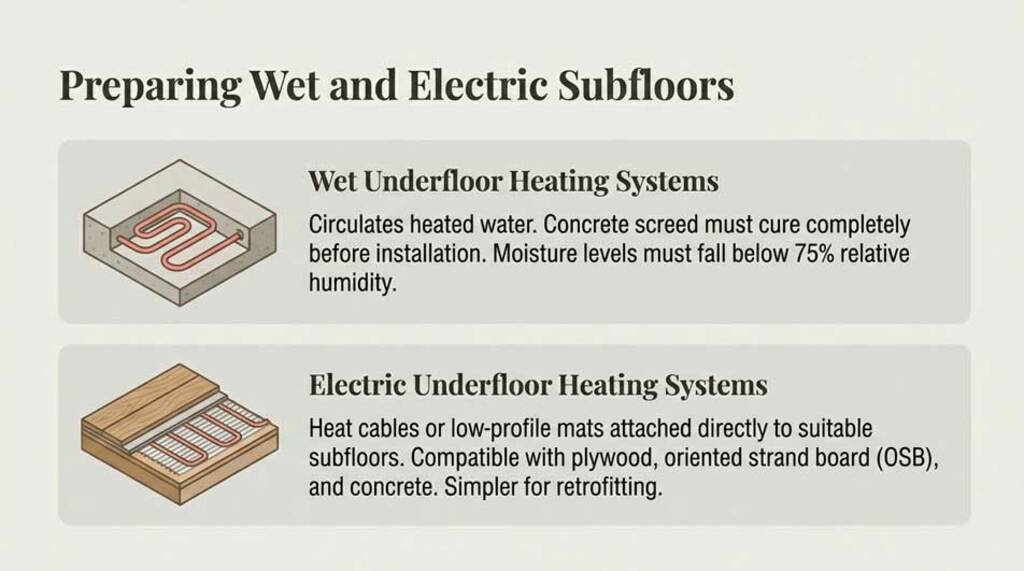
Two primary underfloor heating systems exist: wet systems (hot water pipes in screed) and electric systems (cables or mats). Each requires slightly different flooring approaches.
Wet Underfloor Heating Systems
Wet systems circulate heated water through pipes embedded in concrete screed beneath flooring. The screed must cure completely before wood installation—typically 3–4 weeks for standard concrete or 7–14 days for specialist rapid-drying screeds. Concrete moisture metres confirm readiness; levels should fall below 75% relative humidity.
Between the screed and wood flooring, install an appropriate underlay system. Thermal conductivity matters here; the underlay should transfer heat effectively whilst providing acoustic benefits. Avoid a thick underlay that insulates heat away from the room. Many installers specify thin cork, rubber or specialist thermal underlays designed for heating applications.
Electric Underfloor Heating Systems
Electric systems prove simpler for retrofitting and new installations. Heat cables or low-profile mats attach directly to suitable subfloors. Plywood, oriented strand board (OSB) and concrete all accommodate electric systems. The wood flooring installation follows standard practice once the heating system is certified safe and ready.
Temperature and Humidity Control
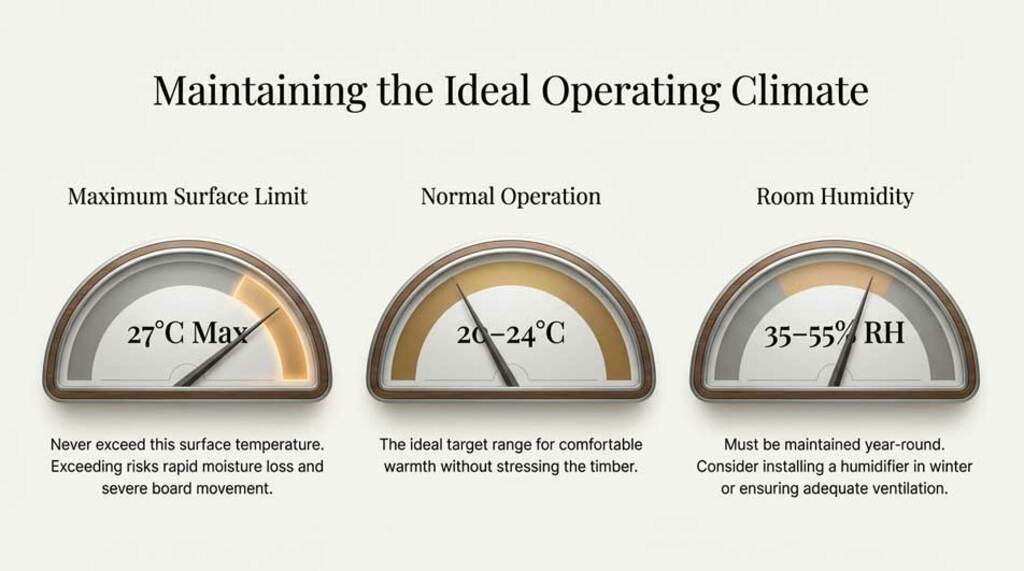
Maintaining consistent environmental conditions protects wood flooring from underfloor heating. Surface temperature should not exceed 27°C under normal operation—exceeding this risks moisture loss and board movement. Most systems operate at 20–24°C, providing comfortable warmth without stress to wood.
Room humidity should remain between 35–55% relative humidity year-round. Underfloor heating naturally dries indoor air during winter, so consider installing a humidifier in well-sealed modern properties. Conversely, ensure adequate ventilation to prevent excessive moisture accumulation.
Installation Best Practices for Properties
- Allow minimum acclimatisation periods (14 days post-heating system installation)
- Install moisture barriers and appropriate underlays between the heat source and the wood
- Leave expansion gaps (8–10mm) at room perimeters to accommodate movement
- Use flooring adhesives and fixings compatible with heated subfloors
- Avoid direct wooden skirting boards against walls—use flexible trim
- Ensure the heating thermostat maintains consistent temperature control
- The commission heating system is gradually turned on over several weeks
- Keep documentation of all moisture readings and installation dates
Maintenance and Longevity

Wood flooring over underfloor heating requires consistent maintenance to ensure durability. Regular vacuuming prevents dirt accumulation in gaps created by seasonal movement. Use a specialist wood floor cleaner formulated for heated floors to avoid excessive moisture, which accelerates moisture absorption.
Avoid sudden temperature swings, which cause rapid expansion and contraction. Programme heating systems for gradual temperature changes. During summer, maintain similar indoor temperatures to winter conditions; dramatic seasonal fluctuations stress wood flooring excessively.
Annual inspections identify gaps widening, cupping appearing, or surface finish deteriorating. Address issues promptly to prevent permanent damage. Quality engineered boards from manufacturers like Boen, Elka and Kahrs typically outlast poorly-specified installations by decades when properly maintained.
Conclusion
Underfloor heating and wood flooring represent an excellent combination for properties when installed with proper understanding and care. Selecting engineered wood from reputable manufacturers, controlling moisture levels meticulously, and following installation best practices ensures years of comfortable, attractive flooring. The investment in quality materials and professional installation pays dividends through enhanced comfort, aesthetic appeal and long-term durability that transforms modern British homes.