

Flooring Trends 2026: What Is Popular in UK Homes Right Now
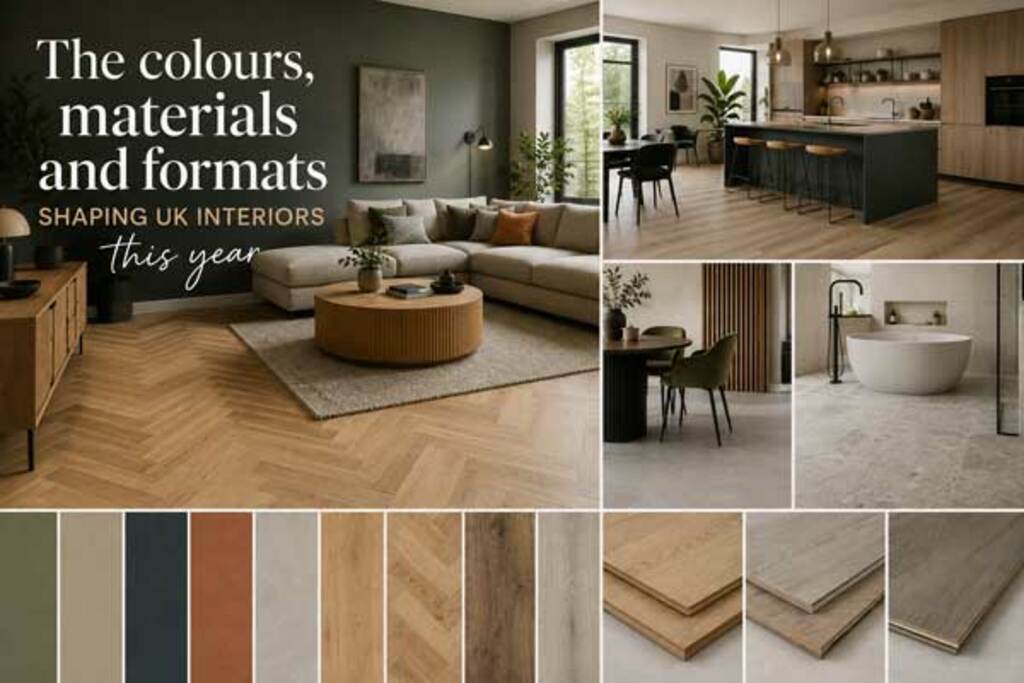 The UK flooring market shifts more slowly than fashion, but clear directions are emerging in 2026. What homeowners, architects and interior designers are specifying has changed noticeably over the past two to three years, moving away from pale, featureless boards towards materials and tones with more character and longevity.
If you're choosing a floor and want something that looks relevant and well-considered rather than obviously dated, understanding where the market's heading can inform your decision without meaning you simply follow the crowd.
Wide Planks Continue to Lead
The shift towards wider boards has been one of the most consistent trends in residential flooring over the past decade, and it hasn't peaked yet. In 2026, boards in the 180mm to 260mm range are in high demand for living spaces, kitchens and open-plan areas. The wider the board, the more visible the natural grain and character of the timber, and the more open the floor looks in a room.
European oak in character or rustic grade, with natural variation including knots, rays and colour shifts, is the most specified option. There's a clear move away from the uniform, pale blond boards that dominated the late 2010s, towards materials that look like they've come from real trees rather than a production line.
Board length has followed suit. Many homeowners and specifiers are choosing random-length boards or requesting longer average lengths, sometimes exceeding two metres, to reduce the number of end joints visible across a floor.
Smoked and Warm Grey Tones
The cold grey washed floors that were popular five or six years ago have largely given way to warmer grey-brown and smoked tones. Smoked oak, produced by fuming the timber with ammonia to deepen the natural tannins, has a richness and warmth that cold grey stains can't replicate. Products like Osmo's Wood Wax Finish range, in tones spanning natural through smoked and darker shades, are being widely used to achieve this effect.
Warm mid-browns are also having a moment. Natural oiled oak without any colour modification is increasingly specified, particularly in homes that use warm natural materials like stone, linen and leather throughout. The authentic timber colour, enhanced by a quality hardwax oil, sits well in these environments and ages attractively.
Herringbone and Chevron Patterns
Parquet patterning, particularly herringbone and chevron, has sustained its popularity through the early 2020s and remains strong in 2026. Both patterns add geometric interest to a floor without relying on colour, and work well in both period and contemporary settings.
Herringbone in 70mm by 350mm or 90mm by 450mm blocks in engineered oak is the standard specification for residential work. Chevron, where each board is cut at an angle so the points meet to form a continuous V pattern, is slightly more demanding to fit but produces a more refined result. Both are available as pre-finished engineered products from manufacturers like QuickStep and Xylo.
LVT herringbone has broadened access to the pattern for rooms where wood isn't practical. LG Hausys Harmony Parquet and similar herringbone-format LVT ranges make it easier to achieve the look in kitchens and bathrooms where solid or engineered wood would be unsuitable.
Sustainable and Responsibly Sourced Materials
Sustainability considerations are playing a growing role in purchasing decisions. More buyers are asking about chain-of-custody certification (FSC or PEFC) and sourcing transparency than in previous years. European oak from managed forests in France, Germany and the Baltic states is generally the most traceable option, and most established manufacturers provide documentation on request.
Matt and Low-Sheen Finishes
The trend away from high-gloss lacquers towards matt and natural finishes has been underway for several years and shows no signs of reversing. Hardwax oil finishes from Osmo, Bona and others produce a low-sheen surface that feels and looks natural. Where lacquers are specified, the demand is firmly for satin or matt sheens rather than anything approaching gloss.
- Wide-plank European oak (180mm plus) in character grade
- Smoked and warm grey-brown tones, particularly fumed finishes
- Herringbone and chevron in both wood and LVT
- Hardwax oil and matt lacquer finishes replacing gloss
- FSC-certified and European-sourced timber
- Engineered boards with thick wear layers for longevity
The clearest message from what's being installed in UK homes in 2026 is a preference for materials and finishes that look genuine, age well, and don't need replacing every ten years. Choosing for longevity rather than novelty tends to produce results that stay satisfying for much longer.