

What to Expect at a Flooring Showroom
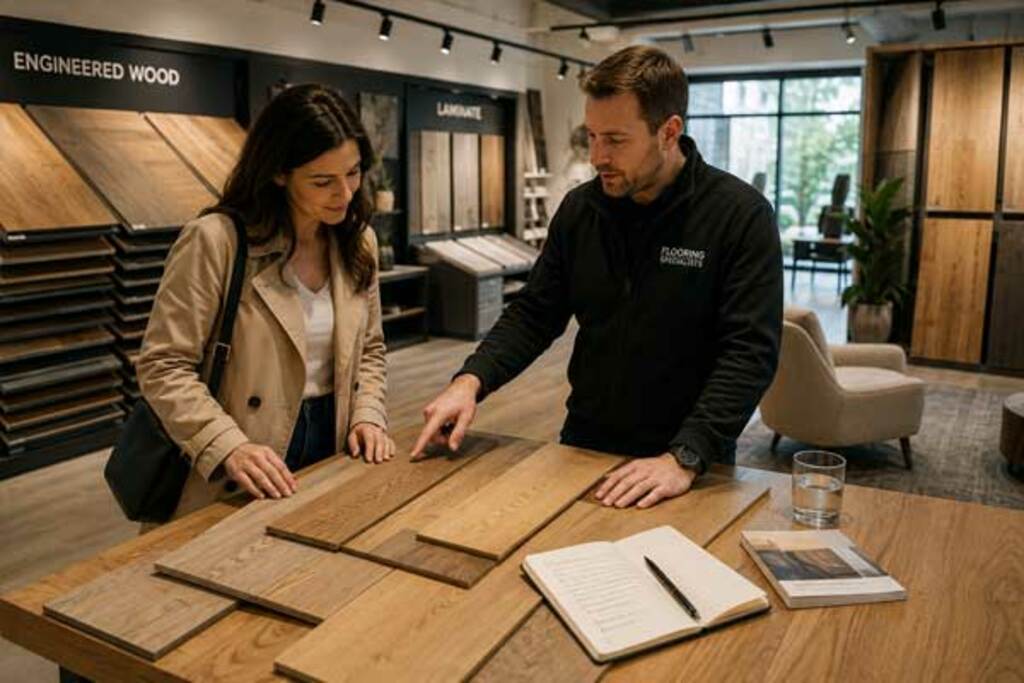 A flooring showroom offers something browsing online simply can't: the chance to see, touch and walk on real floor samples under natural and artificial light. Yet many people show up unsure what to ask or how to compare what's in front of them. Knowing what a well-stocked showroom carries, and how to work through it, saves time and leads to a better decision.
Most established showrooms carry a wide range of product types across multiple price points. Expect engineered wood boards in a range of species and widths, solid hardwood, luxury vinyl tile (LVT), laminate flooring, and a selection of finishing products from names like Bona, Osmo and Loba, alongside finished flooring from manufacturers such as Junckers, Kahrs and QuickStep.
The Core Product Categories
Engineered wood is usually the largest category in any quality showroom. These boards are built from a real hardwood top layer bonded onto a plywood or HDF core, giving the look of solid wood with better dimensional stability. Species range from European oak and ash through to walnut. Widths typically start around 90mm and run to 300mm or wider for statement boards.
Solid hardwood floors are less common but still widely stocked. Junckers is the name you'll see most often for pre-finished solid floors, particularly in beech, ash and oak. Solid floors suit above-ground installations best and need careful acclimatisation before fitting.
LVT has grown considerably in showroom prominence over the past decade. Products from brands like LG Hausys and Polyflor sit alongside stone and concrete-effect options from European manufacturers such as QuickStep. The quality difference between budget and premium LVT is noticeable in person — exactly why visiting a showroom rather than ordering online pays off for this category.
Finishes and Treatments on Display
A good showroom will have sample boards demonstrating different surface treatments. You might see the same oak species finished with Osmo Wood Wax Finish alongside a version sealed with a Bona or Junckers lacquer. The difference in appearance, sheen and texture is significant, and photographs simply don't do it justice.
Hardwax oil finishes, such as Osmo's Wood Wax Finish or Bona's Hardwax Oil, give a more natural, matte look where the grain and texture stay visible and tactile. Lacquered finishes from Junckers or QuickStep create a sealed surface that's generally more water-resistant and easier to keep clean in a busy household. Neither wins across the board — the right call depends on your lifestyle, the room, and how much upkeep you want to sign up for.
Ask showroom staff to show you boards at different sheen levels. Matt finishes hide marks and scratches more effectively day to day. Satin is a solid middle ground for most homes. High-gloss boards look striking but show every footprint and scuff, so they rarely suit family homes with children or pets.
How to Compare Products Effectively
Bring a photo or sample of the existing fixtures in the room you're flooring — door frames, skirting, kitchen cabinet fronts, stair parts. Colours that look well matched under showroom lighting can look completely different at home, so keeping the room's wider colour palette in mind helps narrow things down fast.
Always check the sample under different lighting. Pick it up, take it to a window, hold it at different angles. Engineered boards with a rustic or character grade show more knots and colour variation than prime-grade boards. What looks striking in the showroom can feel overwhelming across a full floor — or, just as often, a board you dismissed at first glance looks far better once you picture it across a larger room.
- Ask about board thickness and the hardwood wear layer depth
- Check whether underfloor heating compatibility is confirmed for that specific product
- Ask about installation method options: glue-down, nail-down or floating
- Confirm lead times for in-stock versus special order products
- Request written specifications so you can compare properly at home
Getting the Most From Showroom Staff
Experienced staff can narrow your options down fast if you give them the right information up front. Be clear about the room type, expected foot traffic, whether pets or children are in the picture, and whether you've got underfloor heating. Mention your budget range early — there's no point spending an hour looking at boards well outside what you're willing to spend.
Ask about installation costs if you're not fitting it yourself, and whether the showroom can recommend or supply fitters — FlooringFirst handles installation across London if you need it. Understanding the full cost before committing matters: a beautiful floor fitted poorly rarely looks as good as a simpler floor fitted well.
Take samples of your shortlisted products home and live with them for a day or two before ordering. Put them in the actual room, check them morning and evening, and get a feel for them underfoot. That one small step prevents a lot of regrettable decisions.